

What does IAP actually do?
Maira Khan:
The Institute of Architects Pakistan is much more than a professional association for architects. It has a responsibility to represent the profession, but also to contribute to the larger questions facing our cities, communities and built environment.
IAP works across architectural education, professional practice, ethics, heritage, sustainability and public awareness. It provides a platform for architects to engage with government, academia, industry and society, while also connecting Pakistan to international professional networks.
For me, one of IAP’s greatest strengths is its ability to bring together different generations of the profession. We have senior architects with decades of experience, educators shaping the next generation, practitioners working on the ground, and young architects bringing new ideas and technologies.
Pakistan is facing enormous challenges — rapid urbanisation, climate change, water and energy pressures, heritage loss and growing inequality. Architecture cannot solve all of these problems, but architects have an important role in asking better questions and designing more responsible responses.
I believe IAP can make its greatest difference when the profession moves beyond designing individual buildings and becomes an active contributor to the future of Pakistan.
Why does Pakistan’s place in the CAA matter?
Maira Khan:
The Commonwealth Association of Architects gives Pakistan a valuable international platform, but I think the relationship is about much more than visibility.
It allows us to exchange knowledge, influence professional discussions and learn from countries experiencing very different architectural, environmental and economic conditions.
Pakistan has knowledge that is increasingly relevant internationally. We have communities that have developed sophisticated ways of living with heat, water scarcity and limited resources. We have extraordinary traditions of indigenous construction and craftsmanship, and we have also experienced some of the world’s most devastating climate-related disasters.
These experiences give Pakistani architects an important perspective to contribute to the Commonwealth conversation.
During my term as Regional Vice President Asia, I saw how valuable these networks can be. When Pakistani architects participate in international leadership, we are not simply representing Pakistan; we are bringing Pakistan’s experiences into discussions about the future of the profession.
Your new Commonwealth-wide role
Maira Khan:
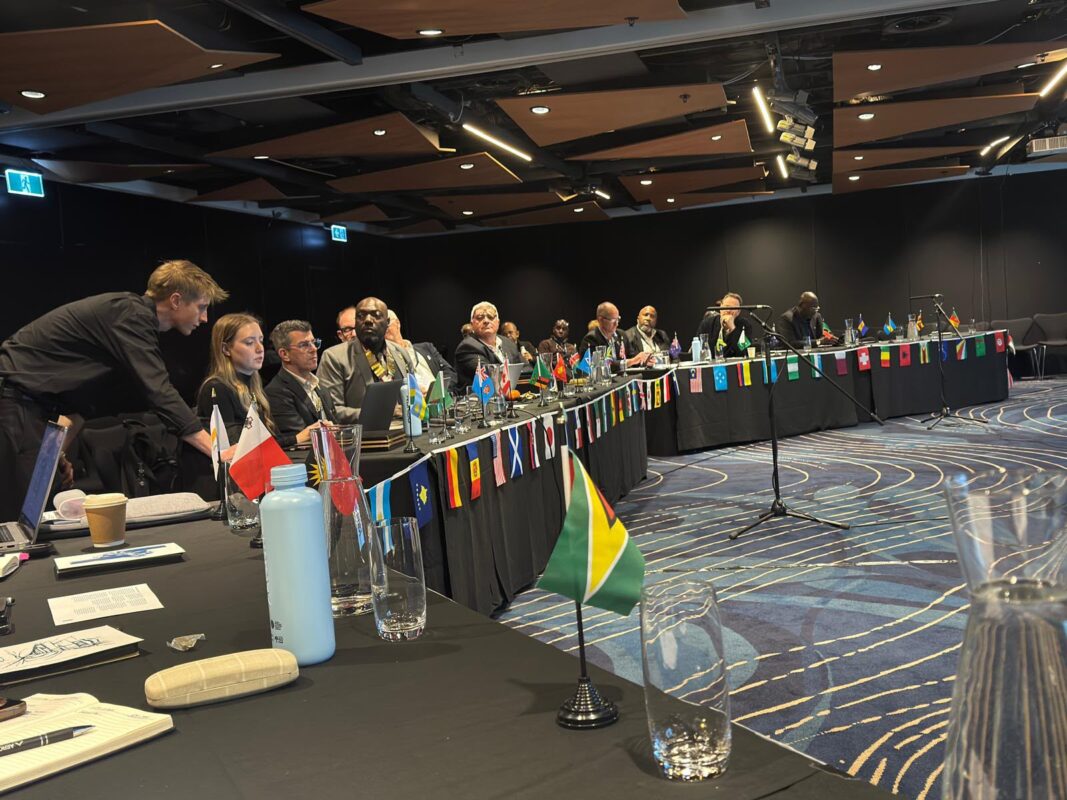
I completed my term as CAA Regional Vice President Asia at the Auckland General Assembly and was subsequently elected Chair of the CAA Professional Practice Committee.
I see this as both an honour and a responsibility. Professional practice is where architectural education, ethics, regulation, technology, economics and public interest all come together.
The profession is changing very rapidly. Artificial intelligence is transforming workflows, climate change is changing what buildings need to achieve, and architects are increasingly expected to understand issues beyond conventional design.
One of the questions occupying me is how professional institutions can help architects navigate these changes without losing sight of the fundamental responsibility of the profession — to serve people and society.
I also believe the Commonwealth has an extraordinary opportunity to learn from its diversity. The challenges of a small Pacific island, a rapidly urbanising South Asian city and a developed metropolitan system may look very different, but there are lessons that can travel between them.
How do we educate the architect of 2040?
Maira Khan:
The architect of 2040 cannot be educated simply as a designer of buildings. They will need to understand climate, technology, materials, communities, economics, heritage and increasingly artificial intelligence.
But I would add something equally important: they need to understand people.
Technology can generate images, analyse information and assist with design processes, but architecture is ultimately about human life. Students need critical thinking, empathy, communication and the ability to understand the cultural and environmental context in which they are working.
In Pakistan, I believe we should also look much more carefully at our own knowledge systems. Indigenous architecture, local materials, traditional construction techniques and community-based approaches contain enormous knowledge about climate adaptation and resource efficiency.
The future should not mean abandoning the past. It should mean understanding what was valuable in the past and combining it intelligently with new knowledge.
New Zealand through an architect’s eye
Maira Khan:
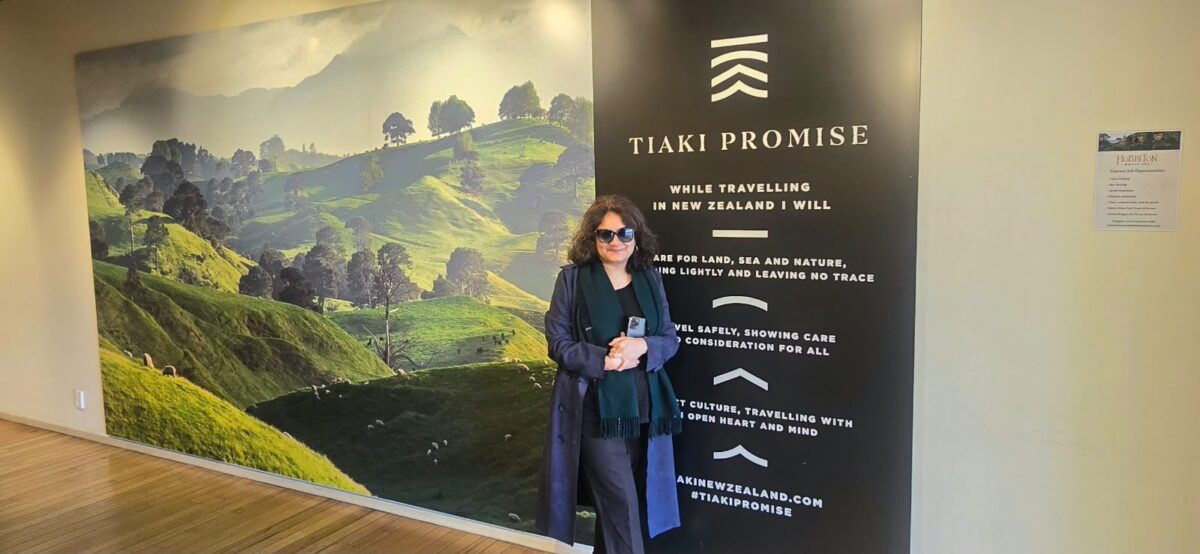
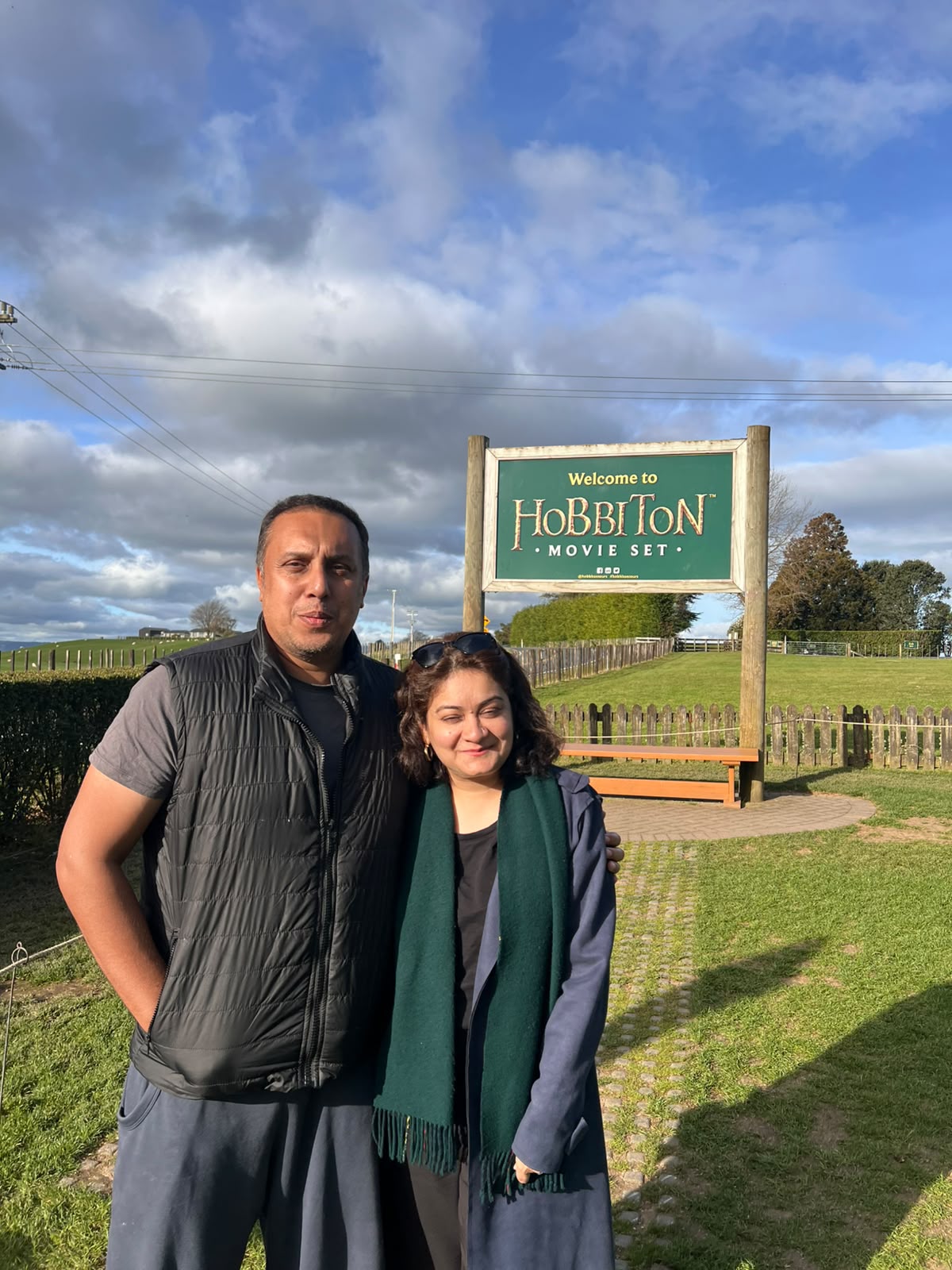
New Zealand made a strong impression on me because of the way architecture, landscape and storytelling seem to work together.
Even places created for visitors, such as Hobbiton, demonstrate the power of creating a strong relationship between landscape, identity and narrative. The experience is not simply about seeing a building; it is about understanding a place and the story it represents.
That made me think about Pakistan. We have extraordinary landscapes, historic cities, crafts, architecture and cultural narratives, but we do not always present them as a connected experience.
Pakistan has the potential to tell its architectural story much more confidently — from the Himalayan regions to the Indus Valley, from the historic streets of Lahore to the architecture of Sindh and Balochistan.
We need to move beyond presenting individual monuments. The landscape, street, craft, food, people, history and architecture are all part of the experience of place.
Pakistan walks into the room
Maira Khan:
I think the most significant change is that Pakistan is increasingly entering international conversations not as an observer, but as a contributor.
Auckland was particularly encouraging because Pakistani architects were visible across so many dimensions — leadership, education, professional practice, awards and emerging talent.
There was also a wonderful continuity between generations. We had established leaders such as Yasmeen Lari, educators such as Prof. Dr. Sajida Haider Vandal and Umar Saeed, professional leadership through IAP and CAA, and a new generation of Pakistani students receiving international recognition.
For me, that was the real story.
Pakistan does not have one architectural identity. We have many. We have heritage conservation, humanitarian architecture, climate-responsive design, contemporary practice, research and a very ambitious younger generation.
The international conversation becomes much richer when all of those voices are present.
Then came the awards
Maira Khan:
The recognition of 12 Pakistani students through CAA awards and commendations was particularly meaningful.
Awards are wonderful, but what matters more to me is what they reveal about the education and ambition behind them. These students are working within a challenging context, yet they are producing ideas that can stand alongside work from across the Commonwealth.
It also demonstrates the importance of educators and mentors. A student’s achievement is rarely an individual story. It reflects studio culture, teachers, institutions, jurors, families and the willingness of young people to explore difficult questions.
I hope these recognitions give Pakistani students confidence. They should know that their ideas can travel internationally while still being deeply rooted in the realities of Pakistan.
Climate is no longer a separate conversation
Maira Khan:
For Pakistan, climate resilience is not an optional specialisation. It is already part of everyday life.
When a building overheats, when a community experiences flooding, when water becomes scarce or when energy costs become unaffordable, architecture is directly involved in the problem.
I believe climate responsibility should therefore begin with the fundamentals of architectural education and practice.
We need to understand orientation, shading, ventilation, landscape, water, materials and local climate before we reach for expensive technological solutions. We also need to reconsider what we mean by development.
My work around climate-responsive and indigenous architecture has reinforced my belief that resilience is often connected to simplicity — local materials, local knowledge, community participation and designs that work with the environment rather than against it.
Projects such as One Eco Street at a Time, developed from Ar. Yasmeen Lari’s vision, are important because they connect climate action with heritage, public space, indigenous planting, local craft and community participation.
Climate resilience should not be an additional chapter in architecture. It should become part of the definition of responsible architecture itself.


What happens when artificial intelligence enters the studio?
Maira Khan:
I don’t think architects should be afraid of artificial intelligence, but we should be very clear about what we expect from it.
AI can help architects explore alternatives, analyse information, accelerate certain processes and open up new forms of experimentation. It can become an extraordinary tool for research and design.
But architecture is not simply image-making.
The difficult part is understanding why a place needs something, who will use it, what the cultural context is, what resources are available and what consequences a decision may have.
AI can generate possibilities. It cannot replace responsibility.
For architectural education, this means we need to teach students not only how to use AI, but how to question it. Students will need stronger critical thinking, design judgment, ethics and understanding of context.
The architect of the future may use more technology than ever before, but the human responsibility of the architect may actually become more important.
Would you tell a young Pakistani to become an architect?
Maira Khan:
Yes — absolutely. But I would tell them to become an architect for the right reasons.
Architecture is demanding. It requires curiosity, patience, creativity, technical understanding and the ability to work with people. It is not simply about drawing beautiful buildings.
If a seventeen-year-old tells me they want to study architecture, I would ask them whether they are interested in how people live, how cities work, how materials behave, how climate affects buildings and how places shape people’s lives.
Pakistan needs architects who can think across disciplines.
We need designers who understand climate resilience, heritage, technology, housing, public space, indigenous knowledge and social responsibility. We need architects who can work with communities as well as clients, and who can understand both local realities and global developments.
Most importantly, we need young architects who are not afraid to ask difficult questions.



And then Lahore
Maira Khan:
Hosting the 22nd Asian Congress of Architects in Lahore in October 2027 is a tremendous opportunity for Pakistan and for IAP.
But I hope we see it as more than an international event. It should be an opportunity to open Pakistan’s architectural conversation to the region and to allow visiting architects to experience the country beyond conference halls.
I would want our visitors to walk through Lahore’s historic streets, experience the relationship between architecture and climate, meet young Pakistani architects and students, see our craftspeople at work and understand the extraordinary diversity of our architectural traditions.
I would also like them to see the challenges we face.
Pakistan’s cities are under enormous pressure. Heritage is threatened, climate change is intensifying, and urban growth is often happening faster than planning systems can respond.
The congress can therefore become a platform for honest exchange — not simply showcasing what Pakistan has achieved, but discussing what Pakistan and Asia need to do next.
One last question
Maira Khan:
If I had only one day, I would take them into the Walled City of Lahore.
I would want them to experience it on foot rather than simply seeing a monument.
I would take them through its streets, its historic neighbourhoods, its markets, its mosques and havelis, and into places where everyday life continues within an extraordinary historic fabric.
Because the real lesson of Lahore is that heritage is not just a collection of beautiful buildings. It is a living urban system.
The street, the courtyard, the shop, the craft, the shade, the people and the architecture all belong to the same story.
And that is something I would like visitors to understand about Pakistan: our greatest architectural heritage is not frozen in the past. It is alive, evolving and still teaching us how to make places.
A final thought
Auckland reinforced something I have believed for a long time: Pakistan has much more to contribute to the global architectural conversation than we sometimes realise ourselves.
Our challenges have forced us to think about climate, resources, heritage, community and resilience in very practical ways. Our universities are producing ambitious young architects. Our professional institutions are becoming more connected internationally. And our established architects have demonstrated that architecture can have a profound social purpose.
The responsibility now is to connect these strengths.
From Auckland to Lahore, I hope the conversation moves beyond recognition towards collaboration, knowledge-sharing and action.
Architecture has always been about imagining the future. For Pakistan, that future has to be resilient, inclusive, rooted in place and open to the world.